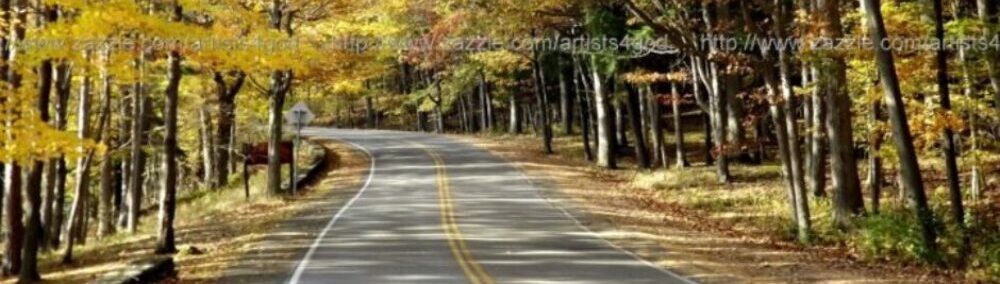
Way, Truth, Life

In the Gospel according to St. John (Ch. 14, V. 6), Jesus says “…I am the Way, and the Truth, and the Life…”

(Courtesy Sacred Bible: Catholic Public Domain Version)

Jesus is our Master, but if we exert our self, as in our self-will and self-love, Jesus ceases being the Way. We are our own “way.” He ceases being the Truth, for we follow our own, or another’s “truth.” And He ceases being the life for us, as we thus embark on the path towards death.

He is “the Way, and the Truth, and the Life” when we abandon our ways, out truths and submit our life to Him.

I have a new book! "The Sober Catholic Way" is a handbook on how anyone can live a sober life, drawn from over 17 years of SoberCatholic posts! It's out now on "Amazon," "Apple Books," "B&N" and and others!"!

My two other books are still available! "The Stations of the Cross for Alcoholics" and "The Recovery Rosary: Reflections for Alcoholics and Addicts" (Thank you!!)

Where have they taken my Lord?

I’m off to morning Mass in a half hour or so, and then I will stay afterwards in our parish’s Adoration Chapel and adore Jesus, truly Present in the host exposed in the monstrance. He had been reposed since last Wednesday evening, so I have been unable to visit and see Him.

I feel a touch of separation anxiety; although I went to the Good Friday services and received Him in Communion, as well as on Easter Sunday, just spending time with His presence for as long as you want has a special feeling. I can go essentially whenever I want and stay as long as I need.

But I have been unable to do that. I was a bit annoyed that He was reposed until today; I figured He’d be exposed once again come Easter Sunday afternoon, but alas He wasn’t. I kind of got the feeling the Eleven Apostles and the women felt over the course of the days since His death until His Resurrection.

“Where is He? Where have you taken my Lord? Tell me, and I will go get Him,” said Mary Magdalene upon seeing the open tomb and no body there.

You really know how much you miss and need something when you can’t get it.

I have a new book! "The Sober Catholic Way" is a handbook on how anyone can live a sober life, drawn from over 17 years of SoberCatholic posts! It's out now on "Amazon," "Apple Books," "B&N" and and others!"!

My two other books are still available! "The Stations of the Cross for Alcoholics" and "The Recovery Rosary: Reflections for Alcoholics and Addicts" (Thank you!!)

In the heart

In this excerpt from the First Reading from today’s Mass for Ash Wednesday we read: “…rend your hearts and not your garments.” (Joel 2:13)

As I said a few days ago “I have been reading quite a lot of Marian spirituality and theology over the past few years.” My interior life has grown as a result, which is not surprising considering that she “…pondered things in her heart…” (Luke 2:19). When you learn in the “School of Mary” you cannot help but develop a richer interior spiritual life which is centered in the heart.

This is connected to the Gospel from today’s Mass, in which Jesus admonishes us to:

“…go into your room and shut the door and pray to your Father who is in secret; and your Father who sees in secret will reward you. “ (Matthew 6:6)

I’m told the practice of “rending your garments” was done in the Temple or in public to demonstrate the strength of a person’s piety or outrage at something offensive (to God. Remember the chief priest rending his garment during Jesus’ Passion.) But it is a public display. The readings emphasize the importance of the interior life, of repenting and converting and making your “heart” and acceptable place for the Lord to dwell.

The Blessed Mother is an excellent model for us in this. Ask her to help you this Lent; pray for her to guide you through this Holy season which culminates in the Passion, Death and Resurrection of her Son which so greatly pierced her heart (Luke 2:35). Lent is our time to grow closer to the Lord, what better teacher than she who quite likely spent her entire life pondering Him in her Immaculate Heart?

I have a new book! "The Sober Catholic Way" is a handbook on how anyone can live a sober life, drawn from over 17 years of SoberCatholic posts! It's out now on "Amazon," "Apple Books," "B&N" and and others!"!

My two other books are still available! "The Stations of the Cross for Alcoholics" and "The Recovery Rosary: Reflections for Alcoholics and Addicts" (Thank you!!)

Random thoughts on the Blessed Sacrament

Random thoughts that I have while sitting in my parish’s Adoration Chapel just looking at Him.

You are little…the World prefers big.
You are humble… the World demands pride.
You are meek… the World encourages arrogance.
You are still… the World is fast.
You are helpless… the World honors the strong.
You are mercy… the World teaches revenge.
You are forgiveness… the World nurtures resentment.
You are quiet… the World blares noise.
You are peace…the World is at war.
You are sacred… the World is profane.
You are trust… the World is in fear.

Some of these had been inspired by a daily devotional of Eucharistic readings, others just popped into my head while thinking about them.

Just sitting quietly, whether alone with Him or with others present, is enough to “set the day aright.” Consider spending time in front the Blessed Sacrament; whether He is exposed or reposed matters little. He is still there awaiting you and welcomes you no matter.

(Maybe you can add your own thoughts in a similar vein in the comments; better yet, if you have a blog do a similar post and I’ll link to it here! …hint-hint…)

(Image courtesy of My wife, Rose Santuci-Sofranko.

I have a new book! "The Sober Catholic Way" is a handbook on how anyone can live a sober life, drawn from over 17 years of SoberCatholic posts! It's out now on "Amazon," "Apple Books," "B&N" and and others!"!

My two other books are still available! "The Stations of the Cross for Alcoholics" and "The Recovery Rosary: Reflections for Alcoholics and Addicts" (Thank you!!)

One curious phenomenon…

I’ve taken to regular repeat readings and studies of AA’s “Big Book” and “12 and 12.” Although my Catholicism takes precedence in my recovery, Twelve Step literature – especially the main reference works, do provide major assistance in dealing with life issues and such.

I have noticed one curious phenomenon every time since I last read the books. New insights are gleaned and I’ve notice things I missed previously, or I understand them in a new way. It is like “as if” a passage has been “rewritten,” or otherwise is substantially different than it was before. This same phenomenon occurs when reading the Bible. Others have noticed this, too.

I’m told that this is because you have made substantial “spiritual progress” since previous readings. You are different than before, and it shows in your understanding of the text.

So, go back and reread, better yet study, the basic texts of your recovery program. And obviously, keep a Catholic Bible handy (and looking well-read)!

I have a new book! "The Sober Catholic Way" is a handbook on how anyone can live a sober life, drawn from over 17 years of SoberCatholic posts! It's out now on "Amazon," "Apple Books," "B&N" and and others!"!

My two other books are still available! "The Stations of the Cross for Alcoholics" and "The Recovery Rosary: Reflections for Alcoholics and Addicts" (Thank you!!)

My soul is sorrowful, even unto death

One of my favorite saints, St. Maximilian Maria Kolbe, once suggested somewhere in his writings that we should meditate on the Passion narratives of Our Lord on Fridays. Or was that St. Therese of Lisieux? Another favorite of mine, I’ve been studying her writings recently along with St. Max’s. I might get their suggestions mixed up at times.

Last Friday I started with the account in Matthew’s Gospel. I got as far as:

Matthew 26:38 Then he said to them: “My soul is sorrowful, even unto death. Stay here and keep vigil with me.”

(via Sacred Bible: Catholic Public Domain Version)

I’m a melancholic individual, sometimes depressed or sad for miscellaneous reasons. Sometimes for too long as I tend to dwell on things. I have contemplated suicide three times in my life (1985-86, 1994-95 and late 2005-early 2006. I may discuss them at some point (if I haven’t already, at the moment I didn’t feel like searching for any blogposts on the subject, but there is a post category on it so I must have…)

On the night He was betrayed, He was praying in Gethsemane, praying hard and was “sorrowful, even unto death.” He knew what was coming. He also knew, based on His nature, that He’d survive. And yet He was still “sorrowful, even unto death.”

Those words just stopped me cold and I couldn’t read past that. I’ve read those words numerous times before, and they’ve always brought some comfort. If Jesus can feel that way, that gives us some consolation. God knows everything, but knowing and experiencing something in His human nature AND in His divine nature I think divinizes the experience. We suffer, and are sorrowful so much so at times that our spirit embraces death. Not necessarily becoming suicidal, but the degree of severity to which we are suffering can be “like death.” We, as baptized Catholics, and thus members of the Mystical Body of Christ, can draw upon this when we “offer up” or pains. He knows about them. Not just because He is an omniscient God, but because He’d been there, He suffered them, too.. Our sufferings are gathered up into the Mystical Body, and as He suffered we can draw strength and courage from that.

Ask for the graces…

I have a new book! "The Sober Catholic Way" is a handbook on how anyone can live a sober life, drawn from over 17 years of SoberCatholic posts! It's out now on "Amazon," "Apple Books," "B&N" and and others!"!

My two other books are still available! "The Stations of the Cross for Alcoholics" and "The Recovery Rosary: Reflections for Alcoholics and Addicts" (Thank you!!)

Transitus

Today is October 3rd and that is the vigil of the Feast Day of St. Francis of Assisi. For Franciscans worldwide, tonight is the “Transitus,”or the ritual observance of his death.

I won’t go into details as to what transpires during the ritual, as I am not a Franciscan and thus have never participated. However, I will blog briefly on the event as it is significant for this blog in some ways.

I read up on the Transitus and various Franciscan sites and blogs variously describe the ritual observance as important as it connects Franciscans with each other – those living today and those who have gone before. That this great community is united by the observance of the death of their Order’s Founder is a wonderful lesson. It is something that can be incorporated in our lives.

“Memento Mori.” “Be mindful of your death.” In memorializing the anniversaries of when our loved ones died, we remember them as they were if their death was lingering due to age or infirmity; but we can also remember them as they had been when still vital and younger. If they died suddenly, it can be a way to “manipulate time,” they were suddenly taken from us but in or memorial observance we can “be there” in some spiritual fashion. If they died too young, well, perhaps it can be a manner in which they are brought forward in life along with us.

Our beloved dead are not forgotten, they are still with us, although in a ritualistic spiritual way. Their death is no longer some event isolated in thr past that might fade a somewhat in memory over the years. Oh, we still remember when Mom or Uncle Jimmy died, but over the years the date slowly becomes just another day in November or July.

Ritual is important. It helps organize life and mark time. “Ritual” is also the hidden word in spiRITUALity, something lost, I think, in those who eschew religion in favor of only spirituality.

As I write this, the feeling is growing within me to actually think about doing this somehow for some of my beloved dead. One way is on the Anniversary of a death is to say the “Office of the Dead” from the Church’s Liturgy of the Hours. Here is an online source: Office of the Dead.

Why is this important for Sober Catholic readers? Death is hard on everyone, but I think there may be a special hurt for people in recovery (regardless of how long clean and sober.) You were somewhat absent from their life while they were alive, because of your drinking and using. And now they’re really gone. Really hard if you owe them an amends. Doing a “transitus” for someone might help you cope with the loss, as well as “make amends.”

Perhaps I’ll think of some thing to do in addition to the Office of the Dead. Making a cemetery visit is good, if possible. Maybe readers this can offer suggestions in the comments.

NOTE: (Reblogged in slightly edited form from The Four Last Things)

I have a new book! "The Sober Catholic Way" is a handbook on how anyone can live a sober life, drawn from over 17 years of SoberCatholic posts! It's out now on "Amazon," "Apple Books," "B&N" and and others!"!

My two other books are still available! "The Stations of the Cross for Alcoholics" and "The Recovery Rosary: Reflections for Alcoholics and Addicts" (Thank you!!)

Look at the Man!

Today was the Solemnity of the Triumph (or Exaltation) of the Cross.

The Cross was a symbol of failure. Christ was condemned as a criminal and hung on a tree. One would expect His movement would just die shortly after. Humiliated, degraded, mocked, beaten and scorned, and finally given a grisly, horrific form of capital punishment. “Just go away already, vanish and take your followers with you,” was quite possibly the collective thought of the Jewish leaders and Romans.

But no, He rose from the dead, His movement continued and now numbers over two billion adherents. Some of whom even actually follow His teachings.

As sober Catholics, we should be taking the Cross as a sign of our victory. We died in our addiction, and in recovery (however it was accomplished) rose from the “dead.” We “nail it to the Cross,” with “it” being our fears, anxieties, trial and tribulations. We have a partner in Jesus Christ. He is our “Higher Power.”

Look at the Cross, especially one with the corpus of Christ on it. ESPECIALLY one like that, not the empty ones Protestants use. Look at the Man on it! He is your brother, Who suffered much worse than you ever did. Yet He did suffer. Even before His death He wept over the death of His friend, Lazarus. On the night before He died, He was “sorrowful unto death.” That is a heart- and gut- wrenching sorrow. For us it would feel as if there would be no end to it. He knew there would, but what He would have to go through…

Contemplate the Cross. He failed. And in doing so won us a victory.

Christ_of_Saint_John_of_the_Cross

“Christ of Saint John of the Cross” by www.dali-gallery.com. Licensed under Fair use via Wikipedia – https://en.wikipedia.org/wiki/File:Christ_of_Saint_John_of_the_Cross.jpg#/media/File:Christ_of_Saint_John_of_the_Cross.jpg

I have a new book! "The Sober Catholic Way" is a handbook on how anyone can live a sober life, drawn from over 17 years of SoberCatholic posts! It's out now on "Amazon," "Apple Books," "B&N" and and others!"!

My two other books are still available! "The Stations of the Cross for Alcoholics" and "The Recovery Rosary: Reflections for Alcoholics and Addicts" (Thank you!!)

Rogation Days

There is a pious Catholic practice I recently became aware of, even though it is over a millennia old. It is the service of the “Rogation Days,” which takes place annually on the Feast of St. Mark (the Gospel writer) on April 25th, and on the Monday, Tuesday and Wednesday preceding Ascension Thursday. I missed the April 25th observance this year.

It is normally done in a church, but is rare nowadays as it was dropped from the Liturgical calendar in 1970; it is now only practiced in those parishes that celebrate the Extraordinary Form of the Mass an its accompanying calendar (and even then, I’m not sure how common it is…)

From the “Catholic Rural Life Prayer Book,”

The word “rogation” comes from the Latin word “rogare” meaning “to ask.”
The three Rogation Days are over 1,500 years old. They began in the fifth
century at Vienne, France, when, in the year 470, there had been crop
failures–due to earthquakes and bad weather–with resulting great food
scarcity and destitution. St. Mamertus, bishop of Vienne, ordered a triduum
of prayer and penance on the three days preceding the Ascension. The clergy
and the people made penitential processions calling upon God to help and
asking the intercession of His saints.

The purpose of the Rogation Days’ service is to implore the mercy of God
that He may keep us from all evils of soul and body, and give to the plants
of the field an increase. In the spring, when the fields are becoming green
and there is promise of a good harvest–but also the possibility of
destruction through frost, hail, or rainstorms–the prayers and processions
are a reminder to feeble man to turn with humility and confidence to the
Giver of all good. For, it is not the earth alone which brings forth fruit,
and not alone the busy hand of man on which the increase depends; but it is
God who gives the increase.”

The words I emboldened give you an idea as to why I’m making it known to you. Although as a pious practice it traditionally is a fixture in rural communities, I think it can be applied for people in addiction recovery. It’s a stretch, but “to implore the mercy of God that He may keep us from all evils of soul and body” is a worthwhile use of this devotion for us alcoholics. The parts referring to “growing things” is… well, I frequently suggest that readers “go outside to get outside” of yourself. Outdoors is where you can meet and get to know God through the study and observance of His works. (The best place is, of course inside a church, at Mass or in front of te Blessed Sacrament) but being amongst His creation is good, too.

I am not sure exactly how the Rogation Days can be practiced at home if they aren’t observed in a parish near you; I do have a copy of the “Rural Life Prayer Book” and am going to just prayerfully read the section on the Rogation Days and go from there, adapting as best I can. You can obtain a print copy for yourself here: Catholic Rural Life Store .

I have a new book! "The Sober Catholic Way" is a handbook on how anyone can live a sober life, drawn from over 17 years of SoberCatholic posts! It's out now on "Amazon," "Apple Books," "B&N" and and others!"!

My two other books are still available! "The Stations of the Cross for Alcoholics" and "The Recovery Rosary: Reflections for Alcoholics and Addicts" (Thank you!!)

Free me from the snare

Alcoholism had us (or still has) ensared us in it grip. By our own efforts we are unable to free ourselves from enslavement.

An excerpt from the Responsorial Psalm from today’s Mass on the Wednesday of the Second Week of Lent is a very good prayer for those still trapped, or for anyone still struggling in some way:

Psalm 31: 5-6

“You will lead me out of this snare, which they have hidden for me. For you are my protector. Into your hands, I commend my spirit. You have redeemed me, O Lord, God of truth.”

via Catholic Public Domain Version of the Sacred Bible.

I have a new book! "The Sober Catholic Way" is a handbook on how anyone can live a sober life, drawn from over 17 years of SoberCatholic posts! It's out now on "Amazon," "Apple Books," "B&N" and and others!"!

My two other books are still available! "The Stations of the Cross for Alcoholics" and "The Recovery Rosary: Reflections for Alcoholics and Addicts" (Thank you!!)